
Narendra Modi's landslide victory gives him the mandate to deregulate diesel prices as well as raise natural gas rates with a clear road map towards free pricing to cut subsidies and shrink the budget deficit.

Tata Motors' MD and CEO, Girish Wagh, has identified rising diesel prices as the most significant threat to India's commercial vehicle (CV) industry recovery, despite the sector recently surpassing its pre-FY19 wholesale peak. Diesel costs account for 25-50% of a truck operator's total cost of ownership, making any increase a critical concern for fleet economics.

Diesel price needs to be revised upward, or subjected to higher taxes, as misuse of subsidized diesel was adding to pollution and public health costs, the government's pre-budget economic report card said on Thursday.

Faced with huge under-recoveries, Indian Oil Corporation on Saturday sought an immediate upward revision of petrol and diesel prices to the the extent of Rs 10.50 paise per litre.
The proposed move would lead to dismantling of the administered price mechanism.
Petrol would cost Rs 33.49 per litre in Delhi while diesel Rs 22.12 per litre.

"There is no immediate plan to decontrol diesel or LPG as they have cascading effect (on general prices)," Minister of State for Petroleum and Natural Gas R P N Singh told reporters in New Delhi.

Holding her party would oppose any 'attempt to sell out the country', she claimed that in the past five months, the Centre had done nothing 'good' and that 'Bharatiya Janata Party is only busy beating its own drum in the social media'.
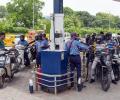
Petrol and diesel price hikes are likely to resume after state elections get over next week to bridge the Rs 9 a litre gap created by international oil prices soaring past $100 a barrel. International crude oil prices shot above $110 a barrel for the first time since mid-2014 on fears that oil and gas supplies from energy giant Russia could be disrupted, either by the conflict in Ukraine or retaliatory western sanctions. The basket of crude oil India buys rose above $102 per barrel on March 1, the highest since August 2014, according to information from the Petroleum Planning and Analysis Cell (PPAC) of the oil ministry.

The government maintained a strong pace of capital expenditure, which jumped nearly 24 per cent to Rs 3.40 trillion in April-June.
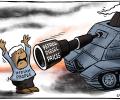
Uttam Ghosh offers his take on the daily increase in the prices of petrol and diesel.

A foreign brokerage warns that sustained crude oil prices above USD 100 per barrel could push India's inflation above the RBI's tolerance level, potentially triggering interest rate hikes.
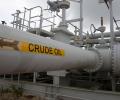
The basket of crude oil that India buys has hit a decade high of $121 per barrel, but retail selling prices of petrol and diesel continue to remain frozen. The Indian basket on June 9 touched $121.28, matching levels seen in February/March 2012, according to data available from the oil ministry's Petroleum Planning and Analysis Cell (PPAC). As per the PPAC, the Indian basket of crude oil averaged $111.86 per barrel between February 25 and March 29 - the immediate period after Russia's invasion of Ukraine sent oil on fire.
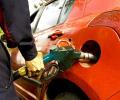
The Bharatiya Janata Party on Thursday described Samajwadi Party's opposition to the hike in diesel price as a "drama" and demanded that the government reduce value added tax (VAT) in Uttar Pradesh if it was really concerned about the people.
"The recent increase in diesel prices is an important step in the right direction," he said while addressing the meeting of the Full Planning Commission which was called to approve the 12th Five Year Plan document.

The Indian government is set to accelerate reforms, including measures to enhance foreign direct investment, speed up divestment, and boost asset monetisation, to maintain economic growth despite rising fuel and fertiliser import costs driven by the West Asia crisis.
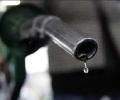
"I am not of the view that diesel price deregulation is inevitable and that is the position taken by petroleum ministry right now. Given the inflationary situation right now, we don't want to do that...," chief economic adviser Kaushik Basu told reporters on the sidelines of a CII event here.

'As long as the vehicle has a flex engine, it is irrelevant if the mixture is 15 per cent or 30 per cent; the performance is the same.'
Petrol, diesel prices hiked by 40 paise

State-owned fuel retailers, who control 95 per cent of the petrol pump sales, sell diesel at government-fixed rates, which are way lower than the cost of production.

India's fertiliser subsidy bill for the current financial year (FY27) is projected to increase by approximately 20% due to surging global prices, primarily driven by the West Asia crisis, a senior official confirmed. Despite this, retail prices for urea and di-ammonium phosphate (DAP) will remain unchanged, ensuring adequate supply for the kharif season.

Diesel rates had gone up by Rs 12.55 a litre between June 7, when oil firms resumed revising prices in line with cost, and July 25.

The government has no immediate plans to raise petrol and diesel prices even though raw material costs have surged to their highest level this year, Petroleum Secretary R S Pandey said on Thursday.

The excise duty cut will translate into a reduction of Rs 9.5 a litre on petrol and Rs 7 a litre in diesel after taking into account its impact on other levies.
Reliance industries on Monday increased diesel prices by Rs 2 per litre.
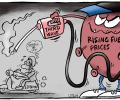
A surge in international oil prices may translate into an increase in the retail selling price of petrol and diesel in India as oil companies face extreme margin squeeze, sources said. Petrol and diesel prices have remained unchanged for 12 days but now the international rate surge is exerting pressure. Current prices of petrol and diesel in the international market are higher by around $4-6 per barrel as compared to average prices during August. However, no increase in retail prices has been affected by oil companies so far, sources said.

The highly anticipated new generation Toyota Hilux is set to launch in India in July this year with significant upgrades, premium features, and a powerful mild-hybrid diesel engine, aiming to capture the Indian pick-up truck market.

The three companies in separate presentations to the Kirit Parikh Committee on fuel pricing suggested immediate freeing of petrol and diesel prices from government control.

Moody's Ratings has highlighted that Indian banks are among the most exposed in the Asia-Pacific region to the West Asia crisis, primarily due to India's high dependence on energy imports, which could lead to increased inflation, higher interest rates, and strained borrower cash flows.
State-run oil firms have sought a Rs 1.50 a litre increase in diesel prices to cover for the rising crude prices, but the government is unlikely to concede to their demand.

Diesel is currently sold at a loss of over Rs 10.80 per litre.
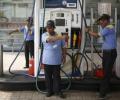
The cumulative increase since the oil companies started the cycle on June 7 now totals to Rs 9.17 for petrol and Rs 11.14 for diesel.
The price of diesel in Delhi will be hiked by 57 paise.
The government has allowed oil companies to raise diesel price by 50 paise a litre per month; bulk users to be charged market price.
The monthly hike in price came after several rounds discussions that the new Oil Minister Dharmendra Pradhan held with state-owned oil firms on continuing with the reform initiated by the United Progressive Alliance government.
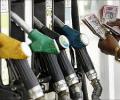
India has asked bulk buyers to pay market rates for diesel since last January and has also been raising the price of subsidised diesel in small amounts every month in an effort to cut its ballooning fuel subsidies.

Mercedes-Benz India plans to continue introducing hybrid vehicles, including the new AMG E 53 plug-in hybrid EV, to meet consumer demand, viewing hybrids as a crucial bridge to full electrification despite the absence of supportive government policies.
Petrol and diesel prices, which have been on a freeze for the past four months in view of assembly elections in states like Uttar Pradesh, need to be increased by over Rs 12 per litre by March 16 for fuel retailers to break even. International crude oil prices shot above $120 a barrel for the first time in nine years on Thursday before retreating a little to $111 on Friday, but the gulf between cost and retail rates has only widened. With international oil prices - on which domestic fuel retails are directly benchmarked - spiking in the last two months, state-owned fuel retailers "need a massive price hike of Rs 12.1 per litre on or before March 16, 2022, just to breakeven and a price hike of Rs 15.1 is required" after including margins for oil firms, ICICI Securities said in a report.
Petrol and diesel prices were on Wednesday hiked in seven states like West Bengal and Maharastra and that of domestic LPG in six states as state-owned oil firms recalibrated rates to reflect changes in local levies.
